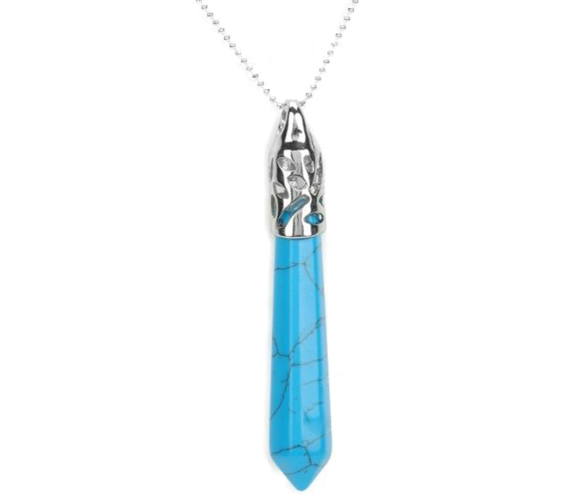
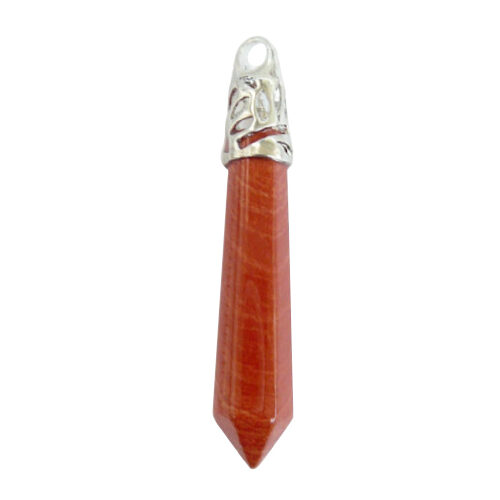
A natural sky-blue turquoise pendant, capped in silver-plated metal. Few stones carry as much human history.
The story
In the canyons of northwestern New Mexico, the Ancestral Puebloan builders of Chaco worked turquoise on a scale found nowhere else in the ancient Southwest. Archaeologists recovered tens of thousands of pieces from Pueblo Bonito alone: beads, pendants and mosaic inlays. Much of it came from the Cerrillos Hills near present-day Santa Fe, and chemical studies have traced other pieces to mines as far away as Colorado and Nevada.
From the Southwest, turquoise traveled south along trade routes into Mesoamerica. The Aztec called it xihuitl, a word tied to fire, the year and preciousness itself, and their artisans set it into mosaic masks and shields reserved for gods and rulers.
Halfway around the world, Egyptians mined turquoise in the Sinai from the earliest dynasties and honored Hathor there as “Lady of Turquoise.” The English name comes from the French for “Turkish stone,” after the routes that first carried it into Europe. Today, Diné (Navajo), Zuni and Pueblo silversmiths carry the tradition forward, as they have since the late 1800s.
Details
- Includes one natural stone pendant, capped in silver-plated metal with a loop for your chain or cord.
- Turquoise is the traditional birthstone for December.
- Every stone is natural, so color, pattern and shape vary from piece to piece.
Care
Take it off before swimming, bathing or showering. Skip lemon juice and harsh cleaners, and wipe it once a week with a soft microfiber cloth. Sweat and moisture can tarnish the silver-plated cap over time; the stone itself is unaffected.
The traditions on this page are shared as history and folklore. This is jewelry, and we make no claim that any stone has a physical or medical effect.





Reviews
There are no reviews yet.