- Built by
- Oneota
- When
- c. 1500–1700 CE
- Where
- near Sioux Falls, Lincoln County
- Visiting
- Open to the public.
The South Dakota side of the great Blood Run trading town, with burial mounds on the bluffs above the Big Sioux River, protected in Good Earth State Park.
The story
Where Blood Run Creek flows into the Big Sioux River, on the border between South Dakota and Iowa, lies one of the largest ancient towns ever built on the northern Plains. From roughly 1500 to 1700, and with roots reaching back earlier, people of the Oneota tradition lived here by the thousands. Their descendants include the Omaha, Ponca, Ioway and Otoe-Missouria nations. Estimates of the population at its height run as high as 8,000 to 10,000 people living on both sides of the river, which some called the Red Stone River.
The town spread for about three and a half miles along the river. People lived in large lodges, farmed corn, beans and squash, hunted bison on the surrounding prairies, and dug many storage pits. They built burial mounds on the bluffs and ridges and laid out circles of boulders. The name Blood Run likely comes from the reddish color iron gives the water.
Blood Run was a great center of trade and ceremony. Its people controlled the making and exchange of pipes and tablets carved from catlinite, the sacred red pipestone quarried to the north in present-day Minnesota, and traded them along with bison products across a vast region. In its last generations, European trade goods found their way here too. A French map from 1718 shows Ioway and Omaha villages at the site.
Loss and protection
When observers described the site in the 1800s, many mounds still stood along the river. Plowing, railroad building, gravel quarrying and looting destroyed many of them in the century that followed. Blood Run was named a National Historic Landmark in 1970, and in 2000 the National Park Service found it worthy of becoming a national park unit.
South Dakota acted first. In 2013, after the state secured land on the Lincoln County side, Good Earth State Park at Blood Run was dedicated, protecting the South Dakota side of the town. A visitor center with exhibits and a film opened in 2017. Across the river, the State Historical Society of Iowa protects the Iowa portion of the landmark, where mowed trails lead past burial mounds.
Visiting
Good Earth State Park is about ten miles southeast of Sioux Falls. Trails wind through oak woods and tallgrass prairie to overlook decks above the Big Sioux, where you can look across to the Iowa side of the ancient town. The visitor center is the best place to start. A park entrance license is required.
- Check visitor center hours with South Dakota Game, Fish and Parks, as they change by season.
- Stay on the trails. The mounds are graves, and the whole landscape is sacred to the descendant nations.
- Never collect artifacts, stones or plants. Report looting to park staff.
Plan a respectful visit
Open to the public. Stay on paths, climb only where stairs are provided, and leave everything as you found it. Visiting guidelines
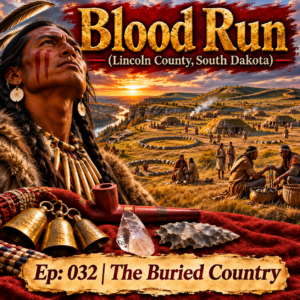 Watch the episodeBlood Run (Lincoln County, South Dakota) Ep: 032 | The Buried CountryWatch and read →
Sources
Spot a mistake, or know more about this place? Tell us.




