- Built by
- Caborn-Welborn (Mississippian)
- When
- c. 1400–1650 CE
- Where
- near Uniontown, Union County
- Visiting
- Nothing remains to visit. This page keeps its memory.
A town and cemetery looted by diggers in 1987. The outrage over the damage led Kentucky and other states to pass stronger laws protecting graves.
The story
On the Ohio River floodplain in Union County, Kentucky, not far from where the Wabash River flows in, lay a large village of the Caborn-Welborn people, a late Mississippian society. From about 1400 into the 1600s, families here farmed corn, beans and squash in the rich bottomland, stored their harvests in deep pits, fished the rivers and hunted the forests. Their potters made jars decorated with distinctive incised and punctated designs. The village was home to many people over several generations, and its dead were buried in cemeteries near their homes, at least seven of them across different parts of the site. In the final generations, European glass beads and brass ornaments, passed along trade routes from distant colonies, were laid in some of the graves.
The site was first documented in 1868 by Sidney S. Lyon, working for the Smithsonian Institution. For more than a century afterward it drew little attention from archaeologists.
1987
In October 1987, a group of ten men from several states paid $10,000 to lease the right to dig for relics on part of the farm. For two months they tore into the cemeteries with shovels and probes, opening an estimated 650 graves or more, throwing bones aside and taking pottery, pipes, beads and other objects to sell. Neighbors who saw what was happening called the Kentucky State Police. At the time, digging up graves in Kentucky was only a misdemeanor, and the diggers faced few consequences.
The images that came out of Slack Farm, of a field pocked with hundreds of holes and scattered human bones, shocked the country. Archaeologists from the University of Kentucky and the Kentucky Heritage Council worked to document what was left, and Native people came from across the country to care for the ancestors. In 1988, Native leaders, including representatives working on behalf of the Shawnee, led ceremonies to rebury the ancestors.
What changed
Slack Farm became a turning point. Kentucky made the desecration of graves a felony. Other states strengthened their own grave protection laws. The case, widely covered in the national press, gave Native American nations and archaeologists the evidence they needed to press Congress for action, and in 1990 Congress passed the Native American Graves Protection and Repatriation Act, which protects Native graves on federal and tribal land and requires the return of ancestors and sacred objects held by museums.
Visiting
Slack Farm is private land and is not open to the public. Its exact location is withheld to protect it, as the Kentucky Archaeological Survey does for all sensitive sites. The best way to honor Slack Farm is to learn its story and to refuse any part in the trade in looted objects.
- Do not try to find or visit the site.
- Never buy artifacts dug from graves. The market is what drove the looting.
- If you see a site being dug, report it to state police or your state archaeologist.
Plan a respectful visit
Nothing remains to visit. This page keeps its memory. Stay on paths, climb only where stairs are provided, and leave everything as you found it. Visiting guidelines
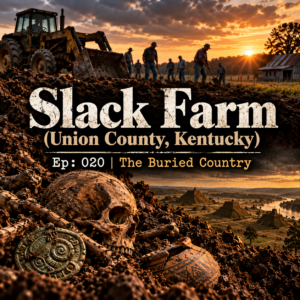 Watch the episodeSlack Farm (Union County, Kentucky) Ep: 020 | The Buried CountryWatch and read →
Also in Kentucky
Sources
Spot a mistake, or know more about this place? Tell us.




