- Built by
- Ohlone (Huchiun) ancestors
- When
- from c. 3700 BCE
- Where
- Berkeley, Alameda County
- Visiting
- Not open to the public. Please respect the site and the people who care for it.
One of the oldest human settlements on San Francisco Bay, built up from shell, earth and burials over thousands of years. The mound was leveled, but deposits survive beneath the surface. The land was returned to Ohlone stewardship through the Sogorea Te' Land Trust in 2024.
The story
Where Strawberry Creek once met the shore of San Francisco Bay, in what is now West Berkeley, Ohlone ancestors founded a village at least 5,700 years ago. It is the earliest known human settlement on the shores of the Bay. Over thousands of years, the people who lived here built up a great mound of shell, earth, ash and the remains of daily life, and they laid their dead within it. The mound was a home, a ceremonial place and a cemetery at once.
Shellmounds like this once ringed the Bay. A survey in the early 1900s recorded hundreds of them. They held the long memory of the Ohlone, the peoples whose villages lined the Bay shore, and in the East Bay the Lisjan (Chochenyo-speaking) people among them. Life here drew on the riches of bay and marsh: shellfish, fish, waterfowl, acorns and seeds.
Paved over
As Berkeley grew in the late 1800s and early 1900s, the West Berkeley mound was dug away and leveled, and the land was covered by factories, houses and streets. The village site did not vanish, though. Deposits and human remains survive beneath the surface. In 2000 the City of Berkeley designated a three-block area as a city landmark.
One block, a 2.2-acre lot at 1900 Fourth Street, had been paved in the early 1970s as the parking lot for Spenger’s Fresh Fish Grotto, a Berkeley institution that operated from 1890 until 2018. It was the only part of the site never built on. When a developer proposed apartments there, Ohlone people and their allies fought for years to protect it, and the case went through the courts. The National Trust for Historic Preservation named the West Berkeley Shellmound and Village Site one of America’s 11 Most Endangered Historic Places.
Returned
In March 2024, the Berkeley City Council voted unanimously to settle with the developer and return the land. The lot was purchased for $27 million, with the Sogorea Te’ Land Trust, an Indigenous women-led land trust based in Oakland, contributing $25.5 million and the city $1.5 million, and title passed to the trust. Lisjan Ohlone leader Corrina Gould, a co-founder of the trust, was a leading voice throughout the long campaign. That summer, hundreds of people gathered on the old parking lot to dance and celebrate. The trust plans a memorial park with a new shellmound and a cultural center.
Visiting
The site remains an active place of Ohlone prayer and ceremony. It is private land held by the Sogorea Te’ Land Trust, which hosts public events and gatherings. Watch the trust’s announcements for opportunities to visit.
- Do not enter the lot outside public events unless the trust invites you.
- Remember that ancestors are buried here, under the pavement and the surrounding blocks.
- Support the work the way the Ohlone ask, for example through the trust’s Shuumi Land Tax.
Plan a respectful visit
Not open to the public. Please respect the site and the people who care for it. Stay on paths, climb only where stairs are provided, and leave everything as you found it. Visiting guidelines
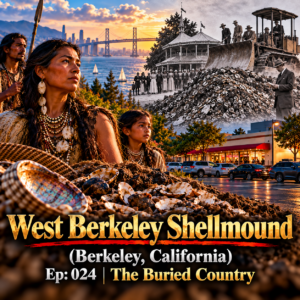 Watch the episodeWest Berkeley Shellmound (Berkeley, California) Ep: 024 | The Buried CountryWatch and read →
Also in California
Sources
- Sogorea Te’ Land Trust: Ohlone and allies celebrate transfer of the West Berkeley Shellmound site
- National Trust for Historic Preservation: West Berkeley Shellmound to be transferred to the Sogorea Te’ Land Trust
- KQED / Associated Press: Ohlone people rejoice after Berkeley votes to return sacred land
- Wikipedia: West Berkeley Shellmound
Spot a mistake, or know more about this place? Tell us.




